Every fall, the same question comes up for homeowners across Maine and New Hampshire: should you lock in your heating oil price now, or take your chances with the market? With Fielding's 2026–2027 Price Protection Plans now available, it's a good time to break down what these programs actually mean — and how to figure out which one fits your household.
Why Price Protection Exists
Heating oil prices can swing significantly from month to month depending on global oil markets, weather, and demand. A price protection plan is designed to take that uncertainty out of your winter budget by locking in — or capping — what you pay per gallon before the heating season gets underway.
It's important to understand: this isn't a one-size-fits-all program. Fielding's offers a few different structures, and the right one depends on your risk tolerance, cash flow, and how much predictability you want.
Breaking Down the Plan Types
Pre-Buy Plan You purchase your season's fuel in advance at a fixed rate. This locks in your price per gallon regardless of what happens in the market afterward — if prices spike, you're protected; if prices drop, you're locked into the rate you agreed to. This option requires full payment up front.
Pre-Buy/Budget Plan This hybrid option requires a smaller upfront commitment — typically a third of your estimated seasonal cost — with the remaining balance spread out in equal monthly payments over several months. You still get the fixed per-gallon price, but with more manageable cash flow.
Budget (Cap) Plan Rather than a hard fixed price, this plan sets a price ceiling. You're billed at either the cap price or the current cash price at the time of delivery — whichever is lower. This gives you downside protection if prices fall while still capping your risk if they rise. Plans structured this way typically include a small per-gallon insurance fee to cover that flexibility.
Easy Pay Monthly Budget This is a budgeting tool rather than a price lock. It spreads your estimated annual fuel cost evenly across monthly payments (typically running from mid-June through mid-April), so you're not hit with large bills during the coldest months. It can be paired with one of the price protection options above for full predictability, both on price and on your monthly bill.
How to "Read" Your Price Lock
When you're reviewing a price protection contract, a few things are worth checking carefully:
- Is it a fixed price or a cap? A fixed price locks you in no matter what — you won't benefit if market prices fall. A cap plan lets you benefit from lower cash prices while still protecting you from spikes, usually for a small added fee.
- What's the payment structure? Full payment, partial down payment, or spread evenly across the contract term — each affects your cash flow differently.
- Is there a minimum usage requirement? Many plans require a minimum annual gallon commitment, so make sure it lines up with your household's typical usage.
- What's the contract window? Budget plans often run on a set schedule (for example, mid-June through mid-April), so timing matters if you're signing up mid-season.
Who Tends to Benefit Most
- Homeowners on a fixed or tight monthly budget who want predictable payments rather than fluctuating bills tend to like the budget/monthly payment structures.
- Households with consistent, higher fuel usage often see the most value from a fixed pre-buy price, since even small per-gallon swings add up over a full season.
- Homeowners who want some flexibility — the chance to benefit if prices drop — are usually better suited to a cap plan rather than a hard fixed price.
- New or budget-conscious customers may prefer starting with the Easy Pay Monthly Budget option alone, without committing to a price lock, until they get a feel for their usage patterns.
A Few Questions to Ask Yourself
- Do I want the lowest possible risk, even if it means missing out on a price drop? → A fixed pre-buy plan may be right for you.
- Do I want protection from spikes but still want to benefit if prices fall? → Look at the cap/budget plan.
- Is my main concern smoothing out my monthly cash flow, not the per-gallon price itself? → The Easy Pay Monthly Budget may be all you need.
- Am I comfortable paying a lump sum or partial down payment upfront? → This affects whether pre-buy or pre-buy/budget makes more sense.
Talk to Fielding's Before You Decide
Every household's fuel needs, tank size, and budget look a little different, and pricing details can shift from season to season based on market conditions. The best way to know exactly what you'd pay under each option is to talk with Fielding's team directly.
Ready to explore your options for 2026–2027?
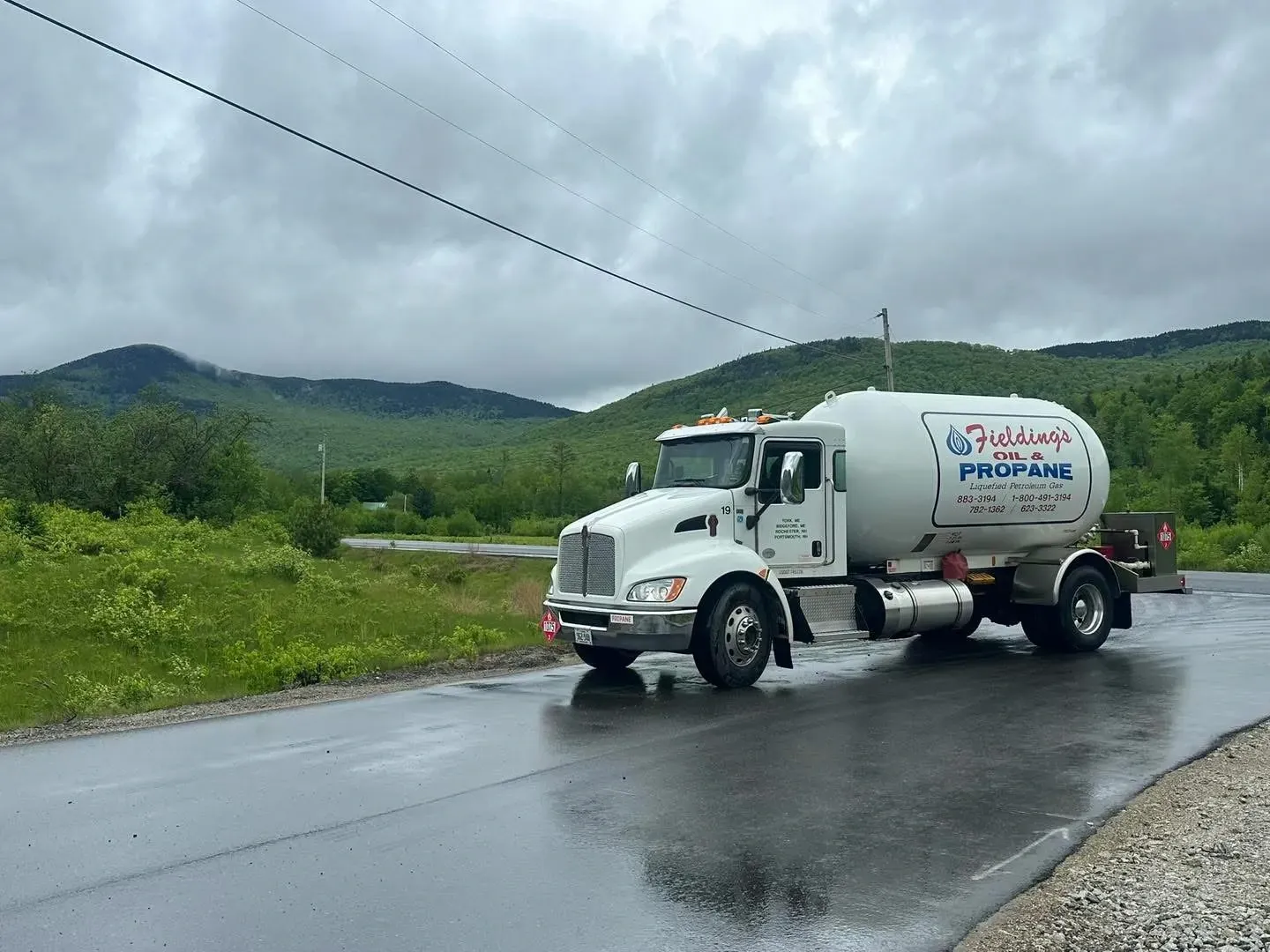
As a family-owned, third-generation company serving Central and Southern Maine and Southeast New Hampshire for over 50 years, Fielding's Oil & Propane is here to help you find the plan that keeps your home warm and your budget predictable all winter long.