Hot water is one of those things you only think about when it stops working — usually at the worst possible moment. If you're building, renovating, or simply tired of an aging electric water heater, propane is worth a look. It heats water faster than electric resistance models, and for homes that already have a propane tank for heating or cooking, adding a propane water heater can be a natural extension of the fuel you're already using.
Tank vs. Tankless Propane Water Heaters
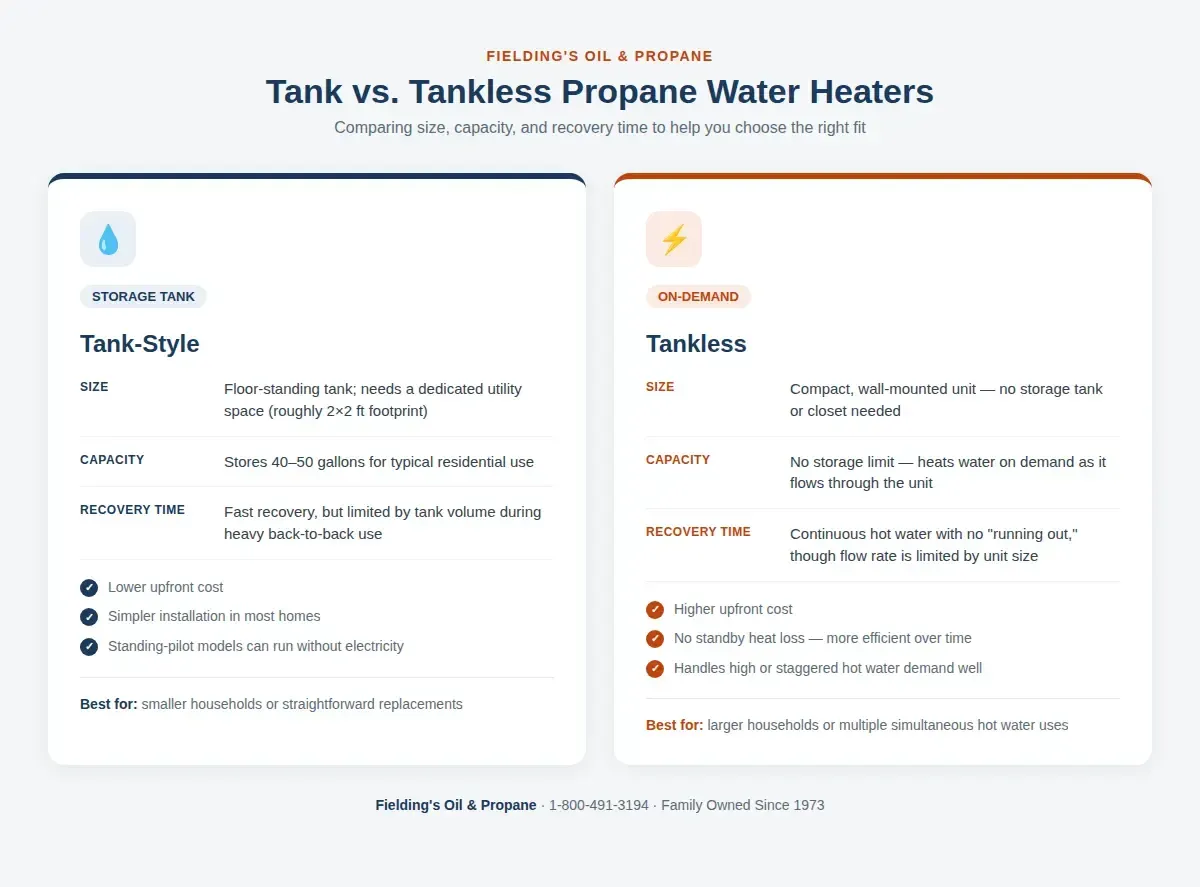
Propane water heaters come in two main styles, and the right one depends on your household's hot water habits:
- Tank-style propane water heaters store and continuously heat a set volume of water (commonly 40–50 gallons for a household), similar in concept to an electric tank heater but generally faster to recover after heavy use.
- Tankless propane water heaters heat water on demand as it flows through the unit, rather than storing it — meaning no standby heat loss and, in principle, an endless supply of hot water as long as the unit is sized correctly for your home's demand.
Tankless units tend to cost more upfront but take up less space and can be more efficient over time, especially for households with high or staggered hot water demand (multiple showers, laundry, and dishwashing happening close together). A tank-style unit is often the simpler, lower-cost choice for smaller households or straightforward replacements.
Why Homeowners Are Switching to Propane
A few reasons propane water heaters have become popular in Maine and New Hampshire:
- Faster recovery time than standard electric tank heaters, meaning less waiting between showers or after laundry.
- Lower operating costs than electric resistance heating, especially in areas with higher electricity rates.
- Reliability during power outages, since many propane water heaters (especially standard tank models with a standing pilot) can continue operating without electricity — worth confirming for the specific model you choose.
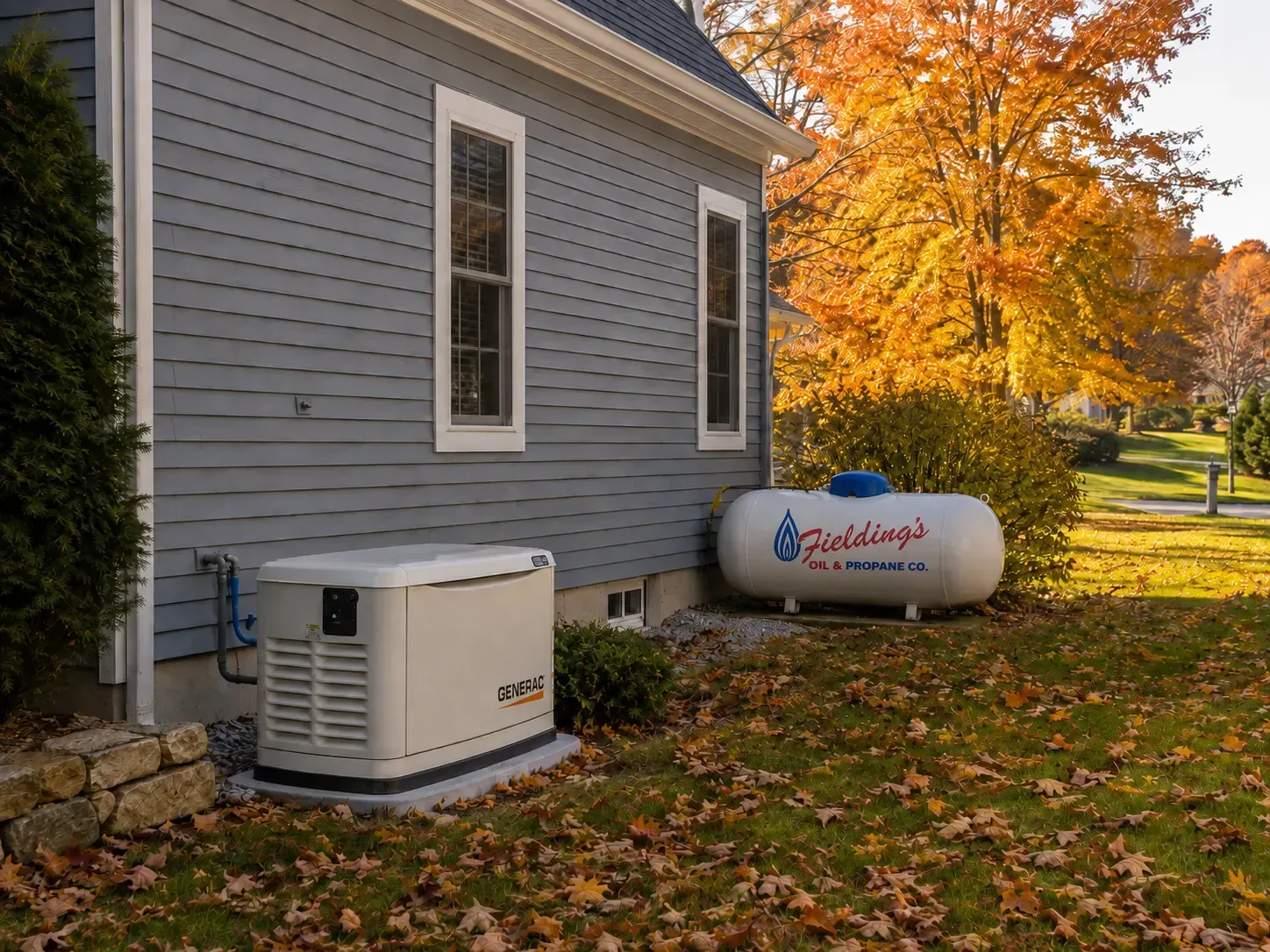
- Shared infrastructure, if you already have a propane tank for heating, cooking, or a generator, adding a water heater to that supply can be simpler than installing new electric service.
Installation & Service with Fielding's
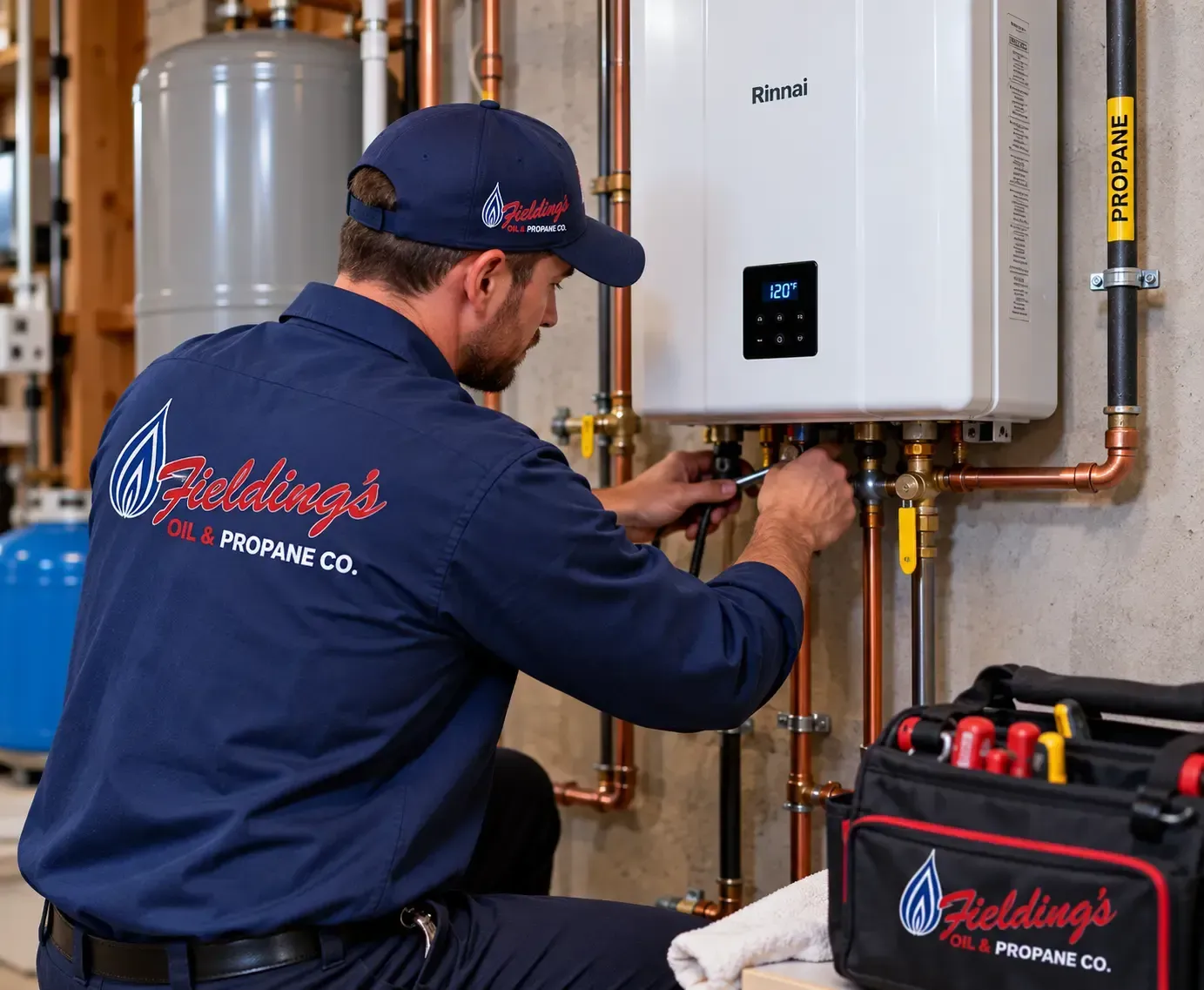
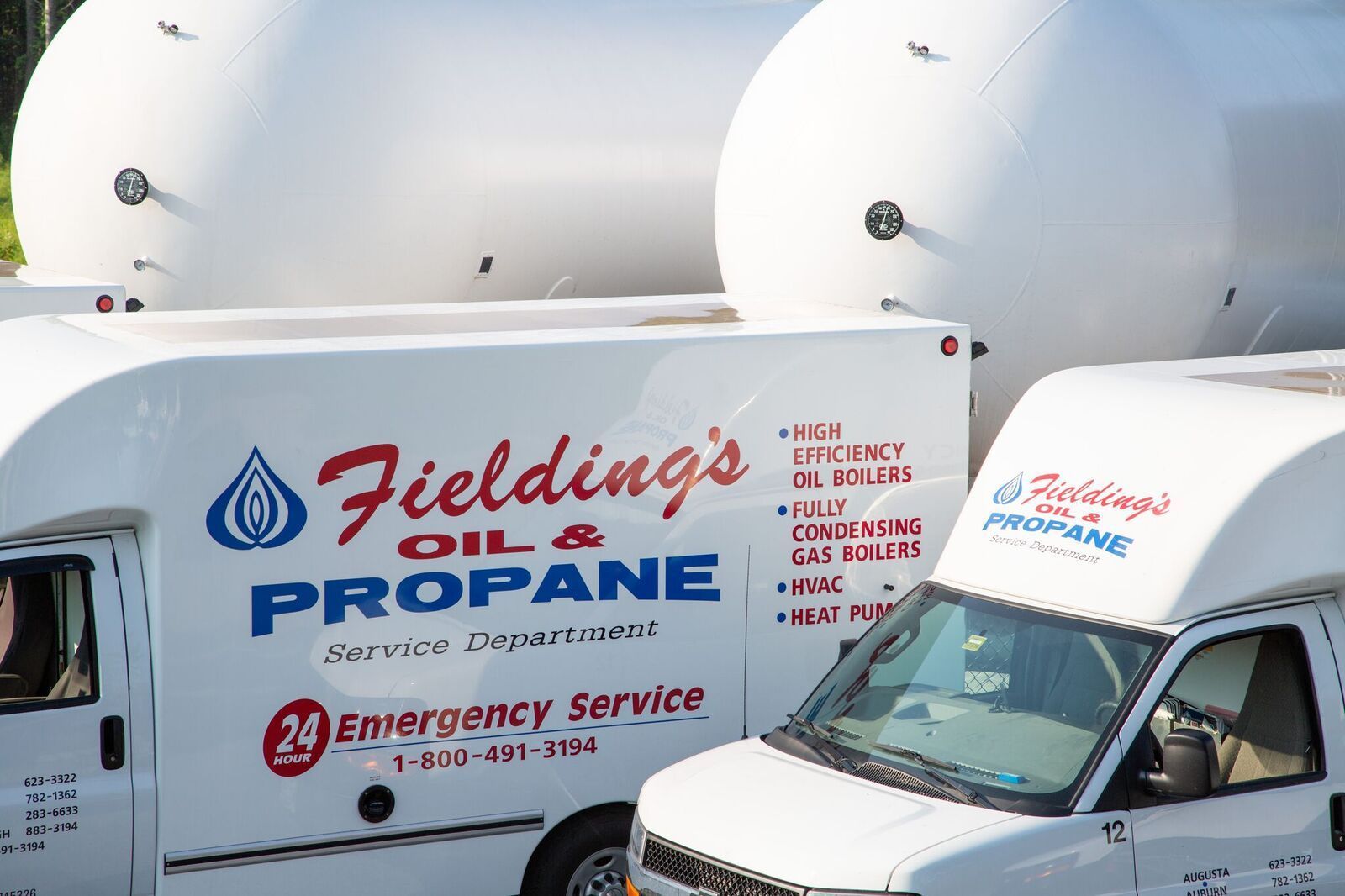
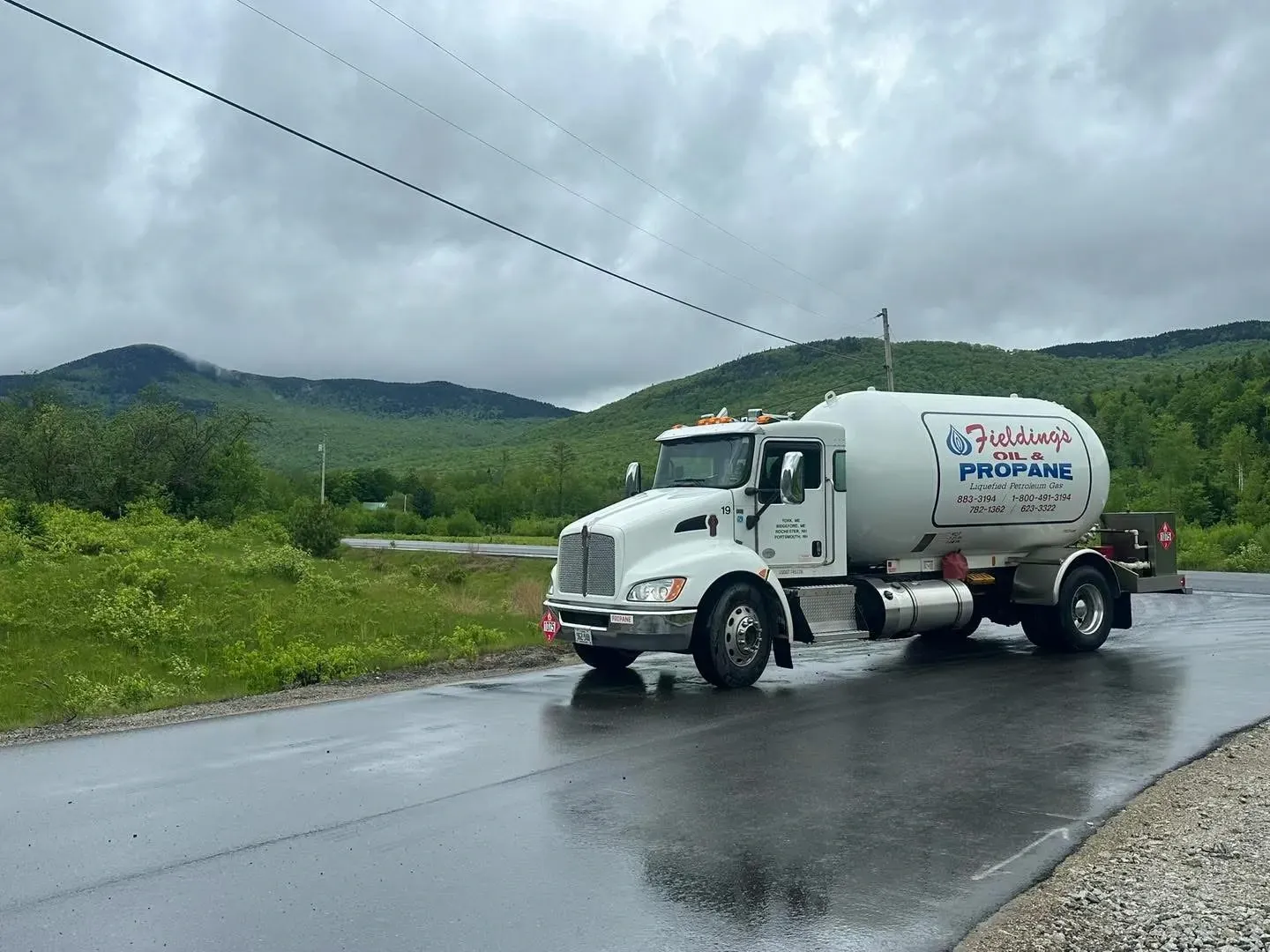
Fielding's offers propane water heater installation and service, including support for Empire and Rinnai water heater equipment. Whether you're replacing an aging unit or adding hot water capacity to a new propane setup, a technician can help you think through:
- Sizing — matching the unit's output to your household's typical hot water demand.
- Tank vs. tankless — based on your space, budget, and usage patterns.
- Venting requirements, which differ between tank and tankless models and affect where you can install a unit.
- Ongoing service to keep the unit running efficiently and catch small issues before they become bigger repairs.
See Fielding's propane services
What to Consider Before You Switch
A few practical questions worth thinking through before installing a propane water heater:
- Do you already have a propane tank and supply line, or would you need to add new propane service to your home?
- What's your household's peak hot water demand — this affects whether a tank or tankless makes more sense.
- Where will the unit be installed, and does that location support the venting a tankless unit typically requires?
- Are you replacing a failing unit under time pressure, or planning ahead? The latter gives you more room to compare options instead of making a rushed decision.
Conclusion
Whether you're drawn to the faster recovery of a tank-style propane water heater or the space savings and efficiency of a tankless model, propane is a solid option for Maine and NH homes — especially if you already rely on propane elsewhere in the house. Call Fielding's at
1-800-491-3194 to talk through sizing, installation, and which option best fits your household.
Contact Fielding's Oil & Propane