Few things are more stressful in a New England winter than discovering your heating oil tank is nearly empty. Running out can mean a cold house, an emergency delivery, and a service call to restart your system. The good news is that a little know-how about your tank gauge goes a long way. Here's how to read it, estimate what you use, and know when to call for a delivery.
How to Read Your Oil Tank Gauge
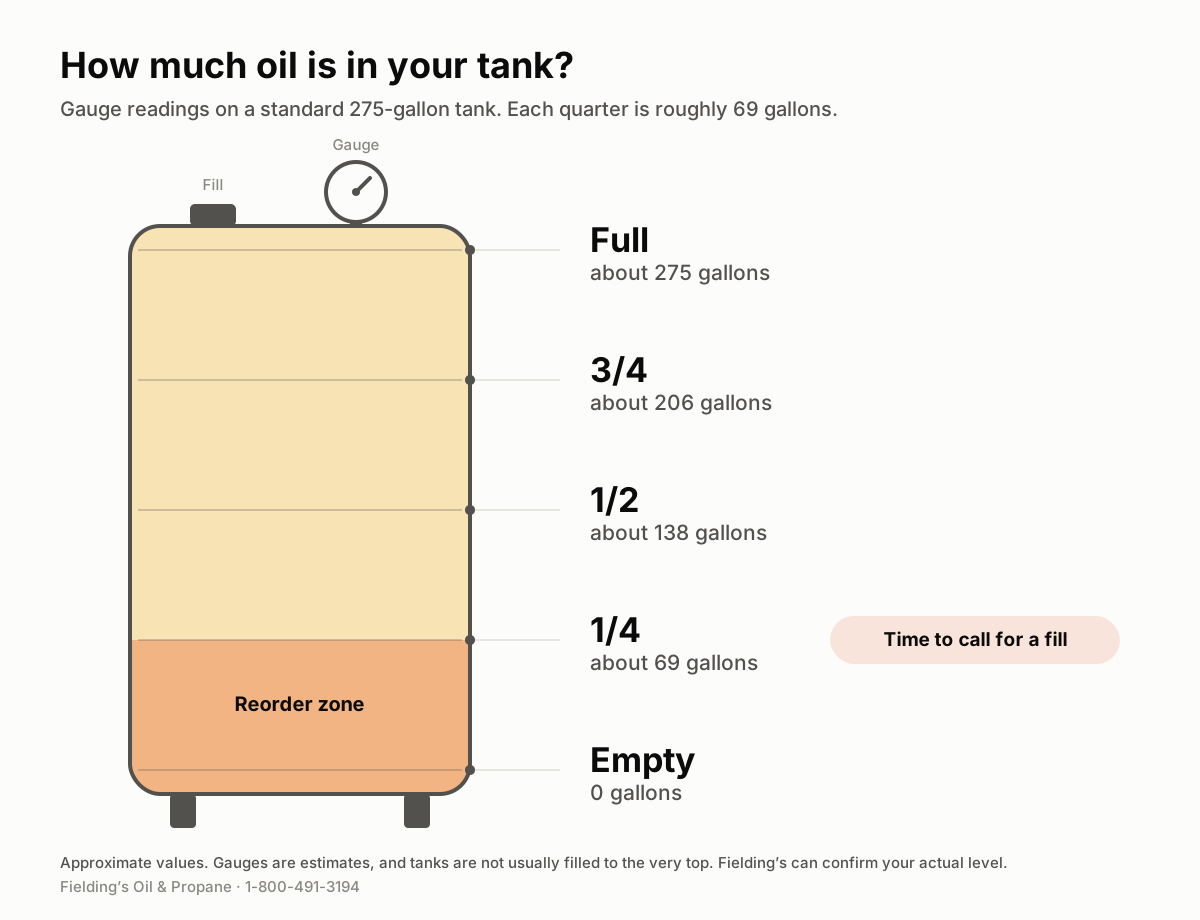
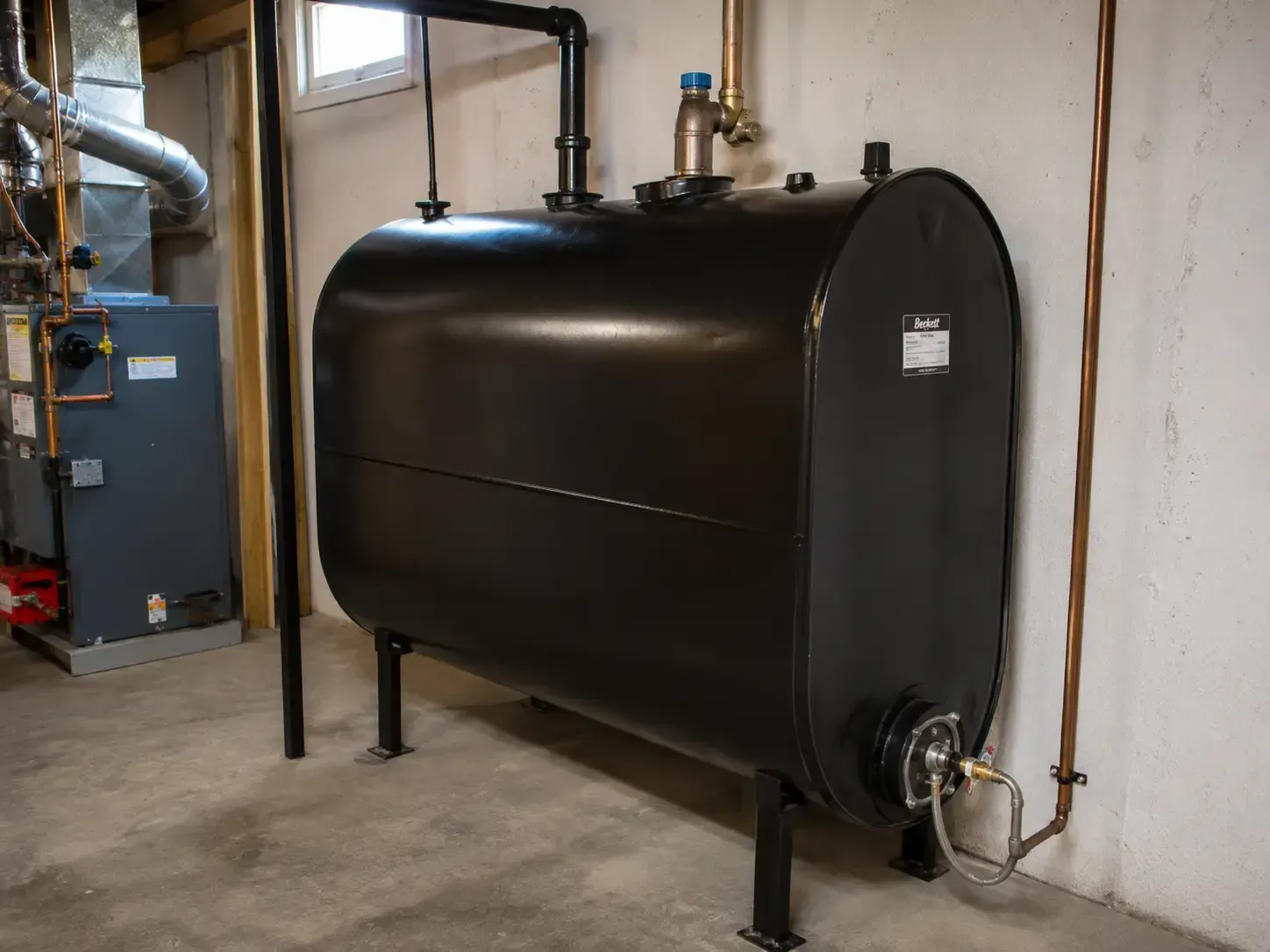
Most residential oil tanks have a gauge on top. Inside, a float rides on the surface of the oil and moves a needle or marker along a scale. Common gauges are marked in fractions, such as Empty, 1/4, 1/2, 3/4, and Full.
For a standard 275-gallon tank, each quarter is roughly 69 gallons:
- Full is about 275 gallons (tanks are usually not filled to the very top).
- 3/4 is roughly 206 gallons.
- 1/2 is roughly 138 gallons.
- 1/4 is roughly 69 gallons.
A couple of practical tips: read the gauge straight on, since looking at it from an angle can throw off what you see, and check it at the same time each week so you can spot trends. If your tank is a different size, such as a 330-gallon or a pair of tanks, the math changes, so ask for help.
Gauges Aren't Perfect
Gauges are handy, but they are estimates. Floats can stick, and the scale between marks is approximate, especially near empty. If the needle hasn't moved in a long time during cold weather, or the reading doesn't seem right, don't just assume it's accurate. Fielding's drivers and technicians can confirm your actual level, and a stuck gauge is worth checking before the coldest weather.
When to Call for a Fill
A good rule of thumb is not to let your tank drop below about 1/4. At that point, you have a limited cushion, especially in January, when a home can burn through fuel quickly. Waiting until the needle is near empty has real downsides:
- Sediment. Sludge that settles at the bottom of a tank can get pulled into your fuel line when the level is very low, clogging filters and causing shutdowns.
- Air in the line. If the tank runs dry, air can get into the fuel line, and a technician usually has to restart the system.
- Emergency timing. Cold snaps and storms increase demand for deliveries. Calling early gives you more options.
How to Estimate How Much Oil You Use
Your fuel use depends on your home's size and insulation, your equipment's efficiency, your thermostat habits, and how cold the winter is. Many Maine and New Hampshire households use several hundred gallons or more per year, but only your number matters.
To get a feel for it:
- Look at past deliveries. Check the gallons on your last few invoices to see how much you typically buy in a season.
- Track a cold week. Note the gauge reading at the start and end of a week and convert the change to gallons using the table above.
- Compare cold and mild weeks. You'll see use climb as temperatures drop. That shows how fast your tank can drop in a deep freeze.
The Easiest Way to Avoid Running Low
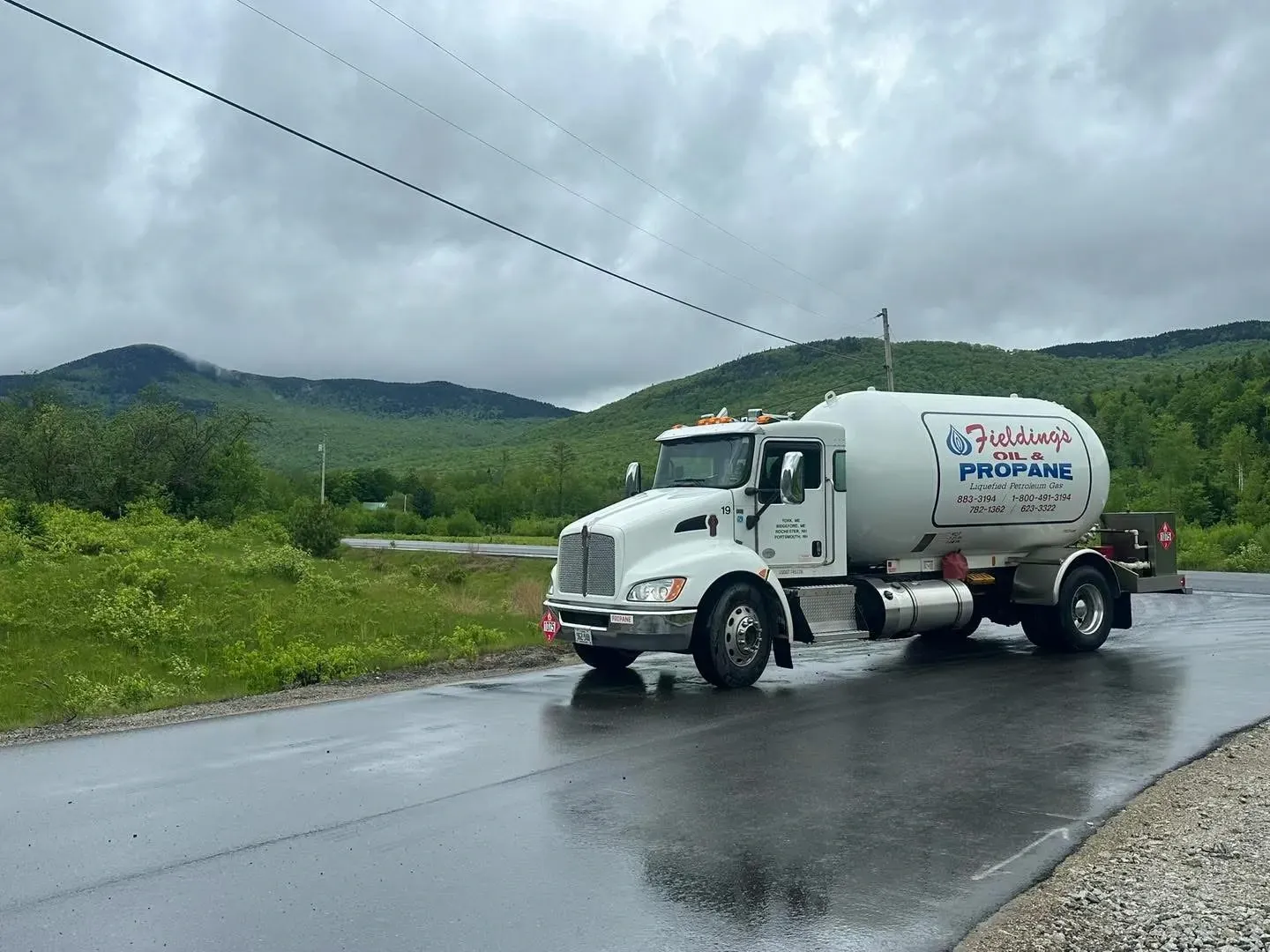
If you'd rather not watch a gauge all winter, automatic delivery takes the guesswork out. Fielding schedules deliveries around your household's usage, so you don't have to track the tank or call in a hurry. If you prefer to order as needed, will-call works too, as long as you call before you drop to 1/4 tank.
Two more steps that help:
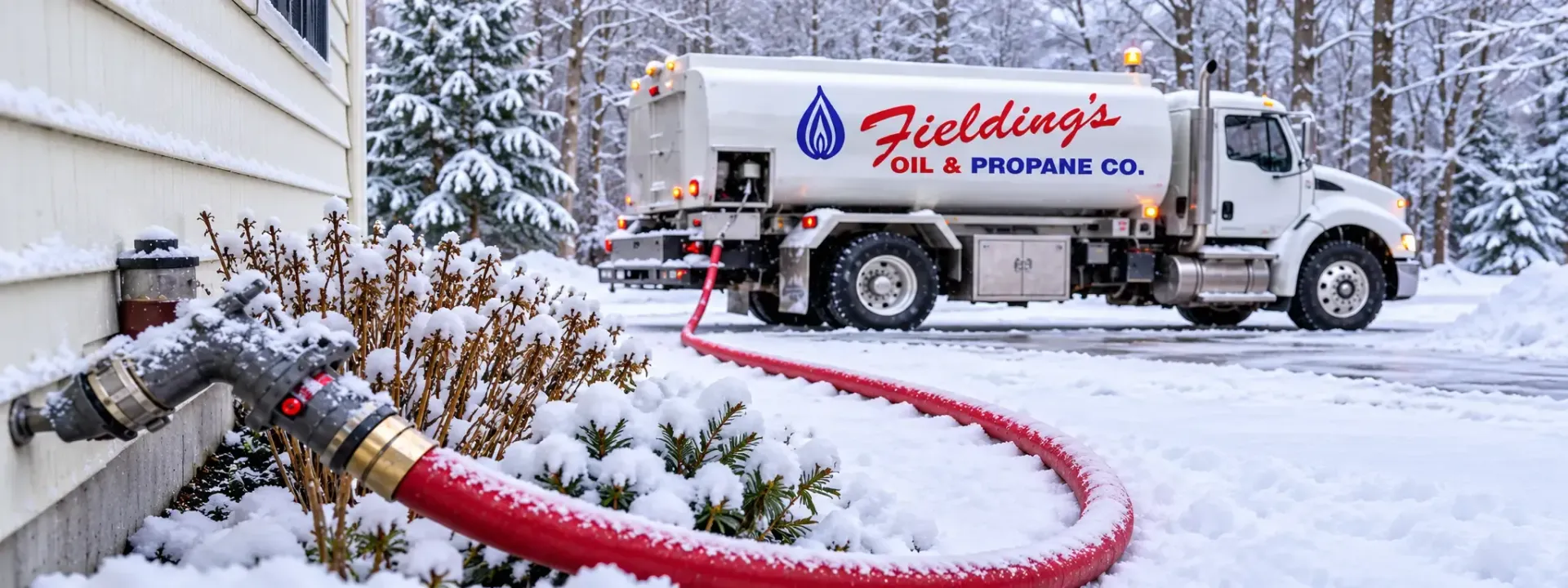
- Keep the path clear. Make sure drivers can reach your tank or fill pipe after snowfall, including clear access and a visible fill cap.
- Service your system. A burner tune-up helps your equipment run efficiently, so you use fewer gallons.
Learn about Automatic Delivery •
Schedule burner service before winter
• Fielding's Price Protection & Budget Plan
Conclusion
Knowing how to read your gauge, roughly how many gallons you burn, and when to call for a fill can keep your home warm and your winter stress-free. If you're not sure your gauge is accurate, or you'd like to put your deliveries on autopilot, call Fielding's at
1-800-491-3194.